



Our guarantee
Authentic products.
Traditionally produced.
Cretan cuisine: the 5 ingredients that matter
By Kevin
Cretan cuisine doesn't need long ingredient lists. It relies on a few basic ingredients used consistently in good quality. Olive oil, herbs, and sea salt are not accessories, but the foundation. Within Greek cooking, the Cretan version is considered the most original, because it has barely changed over generations. If you understand these five ingredients, you understand Cretan cuisine.


What defines Cretan cuisine?
Cretan cuisine operates on a simple principle: few ingredients, but the right ones. Vegetables and legumes are central, meat is a side dish rather than the main act. Seasoning is done with dried herbs instead of ready-made mixes. And olive oil is not for frying, but for flavor. Specifically, there are five basic ingredients: olive oil, oregano, thyme, sea salt and herbal salt. None of them are decorative; all have a function. Olive oil carries, oregano shapes, thyme complements, sea salt finishes, herbal salt connects.
1. Olive oil: the base
In Cretan cuisine, olive oil is not just fat. It's a flavor carrier, marinade base, dressing, and finishing in one. In per capita consumption Greece leads the world: the International Olive Council most recently reports around 9 kilograms per person per year, while other surveys arrive at up to 12 kilograms. The range comes from different methods of measurement and strongly varying harvests. Cretan olive oil from Koroneiki olives has low acidity and a fruity, slightly peppery taste. More on this: Is olive oil healthy?2. Oregano: the leading herb
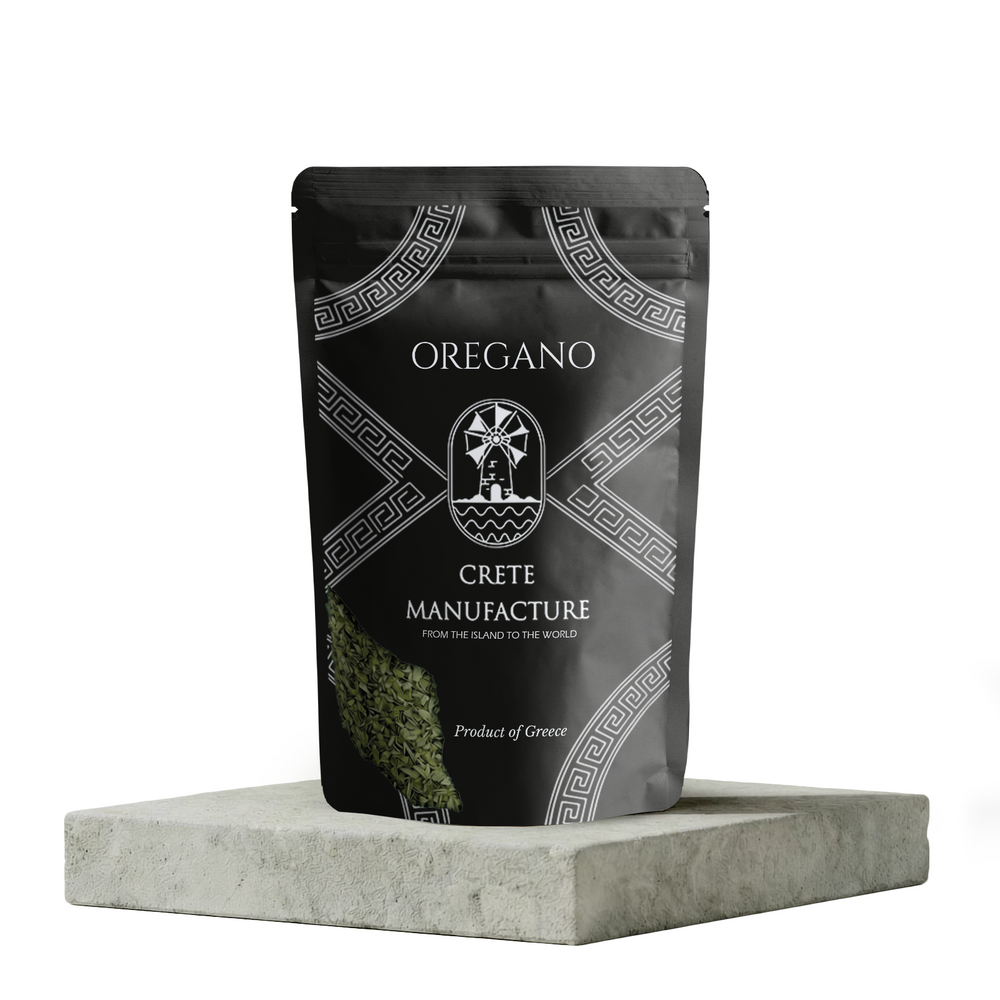
No other herb defines Cretan cuisine as much as oregano. Cretan oregano belongs to the particularly carvacrol-rich Greek subspecies. Carvacrol is the active ingredient responsible for its intense and heat-stable aroma. When switching from supermarket brands, often half the amount is sufficient. More on harvesting and drying: Drying and storing oregano.3. Thyme: the companion
Thyme is milder than oregano, but just as indispensable. It is the second basic herb: for lamb, poultry, fish, stews, and slow-cooked vegetable dishes. Oregano provides the main aroma, thyme carries it through the entire cooking process. Together, they form the basis of herbal salt and classic marinades. Where exactly the difference lies: Oregano or thyme?4. Sea salt: the finish
In Cretan cuisine, sea salt is not used for cooking large quantities, but as a finishing salt. Hand-harvested Cretan sea salt has irregular crystals, a milder taste, and the natural trace minerals that are stripped out of refined table salt. More on this: Sea salt from Crete.5. Herbal salt: the connection
Herbal salt combines hand-harvested sea salt with oregano, thyme and rosemary from Gouves. Herb-dominant and not overly salty. In combination with olive oil, the herbs unfold their best flavors. It is suitable for marinades, roasted vegetables, grilled meat, and fish. How to mix it yourself: Making your own herbal salt.